ADA Certified Portable Restrooms: Turning Room and Clearance Basics
When people inquire about an ADA compliant mobile toilet, they are frequently actually asking an easier question below the lawful language: can an individual enter, move safely, use the commode with dignity, and get back out without unnecessary struggle?
That is where turning area and clearances matter. They are not technical niceties. They are the difference in between gain access to that works and accessibility that only looks acceptable from a distance. I have seen organizers focus on the noticeable attributes, a bigger system, a symbol on the door, a ramp close by, and miss out on the thing that matters most as soon as somebody enters. If the interior does not enable transforming, strategy, positioning, and door handling, the restroom might still fall short the individual also if it shows up to inspect the box.
For any person arranging an ada portable commode rental for an occasion, a public celebration, or a temporary website open to the general public, this subject is entitled to more than a fast skim. The federal baseline comes from the 2010 ADA Standards for Accessible Layout, as interpreted by the Division of Justice and the Gain Access To Board. For portable single-user bathroom collections, at least 5 percent of the systems in each collection must be accessible, and the Accessibility Board explains that this applies also at momentary events. That guideline alone catches several organizers off guard, particularly those that presume accessibility rules soften since the configuration is temporary. They do not.
The easily accessible device is not just the "larger one"
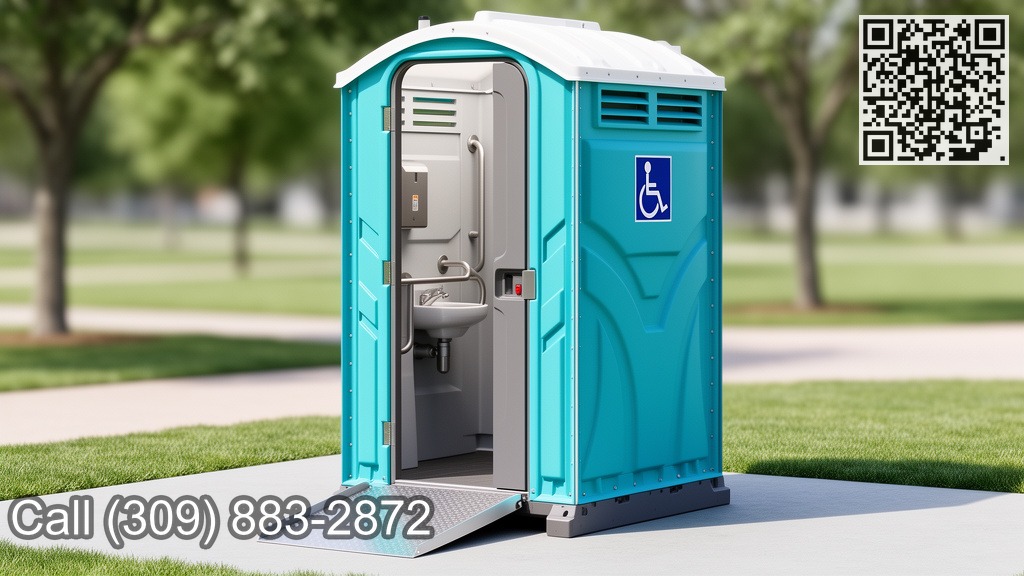
An usual error is to describe any kind of extra-large system as an ada obtainable mobile washroom. Dimension assists, but dimension by itself is not compliance. The available unit should be identified with the International Symbol of Ease Of https://augustavtq982.rivetgarden.com/posts/ada-certified-portable-restrooms-transforming-area-and-clearance-fundamentals-2 Access, and it needs to fulfill toilet-room technical requirements. That includes turning space, fixture clearances, door steering clearances, and the suitable regulations for grab bars and water-closet clearance.
This matters because wheelchair devices do stagnate like standing pedestrians. A wheelchair or scooter individual needs room to get in, alter direction, approach the toilet, and placement for transfer. An individual making use of a walker may need extra space to manage the door and support themselves before sitting. Somebody with balance restrictions may rely greatly on grab bars and clear floor room also if they do not use a wheelchair whatsoever. Gain access to is rarely one-size-fits-all, which is specifically why the criteria focus on functional room and approach geometry rather than broad labels.
If you have ever before stood inside a genuinely useful ada certified mobile bathroom, you see the difference immediately. The space really feels intentional. There suffices open location to transform. The strategy to the commode is not pinched by indoor functions. The door does not create a trap where the user need to turn awkwardly simply to shut it. Good obtainable layout tends to feel tranquil since it reduces friction.
Why turning area gets so much attention
Turning space is one of those phrases individuals repeat without constantly comprehending it. In practice, it talks to whether a user can turn around course or reorient inside the system. An individual may require to get in encountering one direction and leave dealing with one more. They may need to line up with the commode from a certain angle. They may require to avoid backing blindly right into a wall surface or fixture.
Portable toilets make this tougher than irreversible structures do because every inch is under pressure. The shell is small. Parts take on one another. The commode, get bars, door swing, and interior format all impact the same limited impact. If the layout or placement is reckless, the "extra area" can disappear fast.
This is likewise why field problems matter so much. Also an effectively developed ada compliant portable restroom can end up being functionally hard to reach if it is put where an individual can not reasonably reach the door or enter it cleanly. The standards require an obtainable route and entrance, and any required ramps or landings need to abide by the ADA technological requirements. To put it simply, interior gain access to and website accessibility are looped. You do not actually have one without the other.
I have seen event designs where the easily accessible device was practically existing but parked beside a muddy area, a number of inches lower than the surrounding grade, or reached just by crossing soft gravel. The restroom existed. Access did not. That disconnect annoys guests and creates preventable danger for organizers.
Clearance is where comfort and compliance meet
"Clearance" sounds dry, but it controls nearly every meaningful activity inside a mobile bathroom. It refers to the usable space around the toilet, near the door, and within the area in its entirety. Clearance determines whether someone can place close to the component, use grab bars appropriately, and operate the door without strain.
For many individuals, door steering clearance is the initial obstacle. If the door is difficult to take care of and the interior leaves no area to control it, the user starts the entire process at a disadvantage. In a permanent building, there may be larger vestibule room or wall surface deepness to take in unpleasant motion. In a portable system, that margin is much thinner. That is why the technological regulations matter a lot. A mild format mistake can make the whole system far much less usable than intended.
Water-closet clearance is similarly vital. The criteria call for applicable water-closet clearance policies, and those regulations are not attractive. They are linked to real transfer motions and support needs. Get bars just assist if a person can reach and use them from a steady placement. If the toilet is obstructed as well near to bordering surface areas or indoor blockages, benches shed a lot of their practical value.
What I commonly tell organizers is this: accessibility lives in the movement, not the marketing. A brochure can call something an ada handicap available mobile bathroom all day. The genuine test is whether a user can do the standard series of entrance, turn, method, transfer, use, and exit with sensible safety and independence.
Temporary occasions still count
There is a persistent misconception that short-term setups fall under a grey area. The Accessibility Board support does not support that presumption. For clusters of portable single-user commodes, a minimum of 5 percent needs to be accessible, and this applies also at momentary events.
That factor deserves focus because many services happen under time stress. Fairs, wedding events, local celebrations, institution functions, race-day configurations, and seasonal activations frequently scoot. Organizers may treat portable sanitation as one line thing amongst lots of and rely too greatly on practice. The "common order" obtains duplicated without examining whether the number and kind of devices in fact fit the event.
An easy instance reveals the danger. If a collection has twenty single-user mobile commode systems, at the very least one obtainable unit would not be enough if 5 percent needs even more than that in context. Coordinators need to calculate thoroughly based upon the cluster count rather than on instinct. While the arithmetic itself is simple, the functional lesson is bigger: accessibility can not be an afterthought or a favor. It becomes part of the base plan.
The same issue arises when bathrooms are spread throughout a big site. People tend to believe globally, implying "we rented one available unit somewhere." Individuals experience the event in your area. If the obtainable device is separated far from the activity location where someone is investing their time, the plan may be deeply troublesome also prior to any person evaluates technical conformity. Good preparation asks not only "did we lease it?" yet also "did we put it where individuals can in fact utilize it?"
Accessible path and entry, where numerous mistakes begin
A compliant indoor methods little if the approach fails. The confirmed government assistance is clear that mobile easily accessible devices need to have an easily accessible path and entrance, and any type of needed ramps and touchdowns need to abide by ADA technical requirements. That is easy to claim, but on the ground it requires interest from the first shipment conversation.
Site surface areas change. Climate adjustments. Vendors get here in turn. A device put perfectly on Thursday can end up being hard to get to by Saturday after fencing, staging, cords, temporary barriers, or lorry courses change circulation. I have actually watched or else cautious configurations unravel because no person revisited the route after the rest of the site filled up in.
The finest useful routine is to stroll the course as though you were the visitor that needs it. Beginning where people really arrive. Adhere to the path to the device. Notice incline changes, soft surface areas, puddling, abrupt shifts, group pinch factors, and whether the entry feels apparent. The requirements regulate the legal standard, however empathy boosts the outcome. If the course really feels unclear to an able-bodied coordinator throughout a calm site stroll, it will likely be even worse for a guest browsing a hectic event.
Here are five questions worth asking prior to sign-off:
- Is the easily accessible unit plainly understood the International Icon of Accessibility?
- Does the obtainable course stay useful after the complete website build, not just at delivery?
- If a ramp or touchdown is required, has it been dealt with as a conformity product as opposed to a benefit add-on?
- Can an individual technique and get in without battling unpredictable ground or blocked circulation?
- Once within, is there actual turning area and door handling clearance, not simply a larger shell?
That brief review catches an unusual variety of avoidable problems.
Clusters, matters, and the difference in between documentation and experience
The 5 percent regulation for collections sounds basic, and in one sense it is. Still, clusters are where compliance discussions usually get squashed right into arithmetic alone. A coordinator may satisfy the count however miss the lived experience of use.
Suppose an occasion has several toilet locations throughout a grounds. Each area functions as its own cluster for the people near it. The compliance conversation need to mirror how people really move with the website. Even where the called for number of easily accessible units has been rented out overall, poor distribution can produce lengthy detours and separated gain access to. It is worth talking about positioning with the rental provider early, specifically when presence patterns will be uneven.
This is where experienced judgment issues. An ada portable washroom is not a decorative function to tuck concealed. It ought to be integrated into the very same sensible logic that governs every various other restroom positioning: closeness, visibility, path high quality, and upkeep gain access to. Access functions best when it is common and expected, not treated as an exception.
For event teams, that might need transforming behaviors. Some crews place the bigger accessible device wherever it fits most easily during delivery. That technique can backfire due to the fact that the larger footprint typically needs the most careful area preparation, not the least. Space around the unit, method conditions, and entrance alignment all impact usability.
The construction-site exemption individuals misunderstand
One of the more confusing points around includes building and construction sites. The ADA Requirements background differentiates mobile bathroom systems at building websites made use of solely by building personnel. Those are exempt from the portable-toilet access scoping requirement referenced in the 1991 requirement. Individuals occasionally hear that slim factor and overgeneralize it.
The much safer analysis is the limited one. For basic portable commode leasings available to the public or offering more comprehensive users, the accessible-unit requirement stays. That suggests you ought to not presume that since a system is portable, momentary, or on an energetic website, the access policies evaporate. Context matters.
This distinction issues for mixed-use circumstances. A site may be under construction while also hosting area features, sales activity, or temporary public access. As soon as the use case moves past a bathroom offering only building personnel, the planning conversation adjustments. If there is unpredictability, it is smart to treat accessibility as the default preparation pose instead of searching for a loophole.
The label on the door matters, but it is not the whole story
An ada compliant portable toilet should be identified with the International Sign of Accessibility. That marking matters due to the fact that it informs visitors where to go and signals that the unit is intended for accessible use. Still, the sign is purposeful just when coupled with a genuinely usable setup.
I have listened to guests claim, quietly and nicely, that the most awful experiences are not straight-out absence however incorrect confidence. They see the sign, make their means throughout the site, wait their turn, and afterwards discover that the route is harsh, the entrance is hard, or the inside does not support the motions they require. That sort of irritation is avoidable.
For companies, there is a practical lesson right here. Sales language such as ada-compliant portable bathrooms or ada certified mobile toilets should never outrun what is actually being delivered and exactly how it is being sited. For occupants, the lesson is equally direct. Ask simple inquiries. Is the device significant properly? Does it fulfill the required technical criteria? What does the obtainable course look like when whatever remains in place? If a ramp or touchdown is necessary, that is in charge of making certain it complies?
Enforcement belongs to a larger ADA climate
Accessibility needs are not fading right into the background. Also outside the restroom context, ADA compliance remains to rest inside a more comprehensive enforcement setting. Recent federal support expanding internet and mobile accessibility deadlines for state and local government entities underscores a crucial fact: ADA compliance continues to be energetic across sectors.
That more comprehensive environment issues since companies often underestimate just how access problems attach. The same company, location, municipality, or event manufacturer that is examining digital access might likewise need to look tougher at temporary physical access. Portable hygiene can appear small compared with structures, sites, allows, and procedures. To the person that needs the washroom, it is not little at all.
A thoughtful organization treats an ada mobile commode as component of its public-facing ease of access posture, not as a separated rental line. That change in frame of mind tends to improve end results due to the fact that it welcomes much better control between procedures, facilities, event planning, and risk management.
Where real-world configurations commonly go wrong
Most failings are not remarkable. They are cumulative. A somewhat inadequate placement right here, an afterthought route there, an obstructed technique after one more vendor shows up, an unit selected for footprint without adequate attention to maneuvering within. Each choice may look small on paper. Together they create a bathroom that many people can not use effectively.
The persisting difficulty areas are normally these:
- Treating the easily accessible system as optional until completion of planning.
- Counting the device appropriately however positioning it poorly.
- Focusing on exterior look while disregarding transforming space and clearances.
- Ignoring the course after climate or website build modifications conditions.
- Assuming momentary occasions obtain more flexibility than the requirements in fact allow.
None of these troubles is attractive, and that is precisely why they linger. They are routine mistakes. Routine mistakes call for disciplined regular fixes.
Better inquiries result in better rentals
If you are organizing an ada mobile bathroom service, the best discussions are not abstract. They are concrete. Ask how the obtainable unit will be identified. Ask about the route and entry. Ask whether ramps or touchdowns are needed and exactly how they will satisfy the technological demands. Ask exactly how the unit's inside supports the called for transforming space, steering clearance, and component clearances. Ask these concerns prior to shipment day, not while visitors are arriving.
There is likewise value in walking the site with both operations and visitor experience in mind. A washroom that is lawfully compliant but hard to discover, isolated from the major task area, or surrounded by congestion can still develop an inadequate customer experience. The standards offer the minimal technical threshold. Good planning adds sound judgment and respect.
That combination matters most for the people who depend on it. An absolutely obtainable configuration decreases stress and anxiety before it starts. Visitors do not have to ask yourself whether the path will work, whether the door will catch them, or whether the interior will certainly support fundamental movements. They can just make use of the facility and move on with the remainder of their day, which is exactly the point.
Access that works is seldom accidental
The best ada certified obtainable portable bathrooms are often the result of intentional selections. Someone considered the cluster count. Somebody made certain the obtainable course remained open after various other equipment arrived. Somebody checked the entryway problems. Somebody understood that transforming space and clearances are not legal trivia yet the core of practical access.
That degree of care is not lavish. It is practical, and it is humane. When an ada-compliant portable toilet is picked and placed well, really little calls focus to it. People utilize it as required. Movement is smoother. Disappointment drops. The event or website really feels extra inviting due to the fact that it actually is much more welcoming.
Portable washrooms will never really feel luxurious, and that is not the requirement. The standard is use, self-respect, and conformity grounded in the 2010 ADA framework. For tenants, companies, and coordinators, that suggests resisting shortcuts and taking area seriously, particularly the transforming space and clearances that establish whether the toilet operates in genuine life.
When you get those fundamentals right, you are not just leasing a larger box. You are making room for people to participate fully.
 Ask ChatGPT
 Ask Grok
 Ask Perplexity
 Ask Claude
 Ask Google AI
 Ask You